
How to treat wooden benches (how to clean them and apply protective wood oil)
No matter how hard-wearing your wooden bench is, it is important to keep it clean and protect it from the elements. This article provides a simple tutorial on how to treat wooden benches. It includes how to clean them and how to apply protective wood oil.
How to treat wooden benches
How to clean wooden benches: step-by-step
For an outdoor wooden bench, cleaning it regularly will remove algae, lichen, plant matter and other debris that, over time, will cause damage to the wood. It is also a very simple process that shouldn't take too much time, so the more regularly you clean your bench, the better.
If you can, clean your bench on a sunny day to help it dry, be sure to lay down an old blanket or towels before you turn it over to avoid damaging your bench or flooring.
This process is also relevant for indoor benches, especially those used in food preparation areas that can pick up dirt over time, again be sure to protect your working area by laying down old blankets or sheets where you can.
- Fill a bucket with warm water and very mild soap. We don't recommend using washing-up liquid because this tends to contain abrasive detergents that can damage the wood and surface oils.
- Using a clean cloth (micro-fiber is good), thoroughly wipe down the upper surfaces of your wooden bench. Make sure to wipe it dry afterwards.
- Safely turn the bench upside down. Get a family member or friend to help you, especially if the bench is heavy, and wear appropriate footwear.
- Thoroughly wipe down the underside of your bench in the same manner.
- Turn the bench upright and make sure it has no water residue and is wiped dry.
And that's it!
If you're looking for a ready-made solution, explore our customisable handcrafted wooden benches designed for everyday use.
Keeping your indoor wooden benches looking their best
To protect and maintain indoor solid wood benches, we use Treatex Hardwax Oil — an eco-friendly blend of natural oils and waxes that protects the wood while allowing the wood to breathe naturally.
For ongoing care, we recommend using a silicone-free furniture wax every 2–6 weeks, depending on use, and applying a fresh coat of hardwax oil approximately every 1–2 years.
For more detailed guidance, see our care and maintenance tips.
Many of the same care methods apply to our solid wood dining tables as well.
Mop Up Spills Immediately:
Liquid spills, particularly water, can damage wood if left for too long. Wipe up any spills promptly to avoid stains or warping.
When cleaning, ensure the cloth is slightly damp, never soaking wet. Excess moisture can seep into the wood and cause irreversible damage.
Avoid Aggressive Cleaners:
Do not use bleach, ammonia, or other harsh chemicals on your wooden surfaces. Similarly, steam cleaners should never be used, as excessive heat and moisture can cause the wood to expand and warp.
Restoring with Treatex Wax Polish:
Treatex Wax Polish is the ideal solution for rejuvenating tired or worn wooden surfaces. It’s easy to apply and is based on natural, sustainable raw materials such as Linseed oil, Sunflower oil, Jojoba oil, Beeswax, Carnauba wax, and Candelilla wax.
Apply the Treatex Wax Polish with a lint-free cloth and buff the surface. The result is a water-repellent, non-slip finish that not only restores the surface’s shine but also enhances its durability.
For more guidance, see our care and maintenance tips.
How to treat outdoor wooden benches: step-by-step
Now you know how to clean your outdoor wooden bench, it's time to look into surface protection.
Even the most durable wooden bench will eventually succumb to the elements. Outdoor benches clearly have the most need of protection due to their exposure to direct sunlight (and damaging UV rays), rain, snow, hail and extreme fluctuations in temperature and humidity. In addition to following the steps below, we recommend investing in a weatherproof cover.
When looking at how to treat wooden benches, there are three main options: paint, varnish and wood oils. Paints and varnishes form a surface layer over the wood, with paint changing its colour, but they are generally less suited to ageing timber than oils.
Finishing oil penetrates the wood for a deeper form of protection. Some finishing oils (like teak oil) will darken the wood, while others (e.g. tung oil) are known for bringing out the wood's natural colour.
How to apply protective oil to a wooden bench
Since we advise our customers to oil their outdoor wooden benches, this step-by-step guide focuses on this process.
- Thoroughly clean your wooden bench following the step-by-step guide above
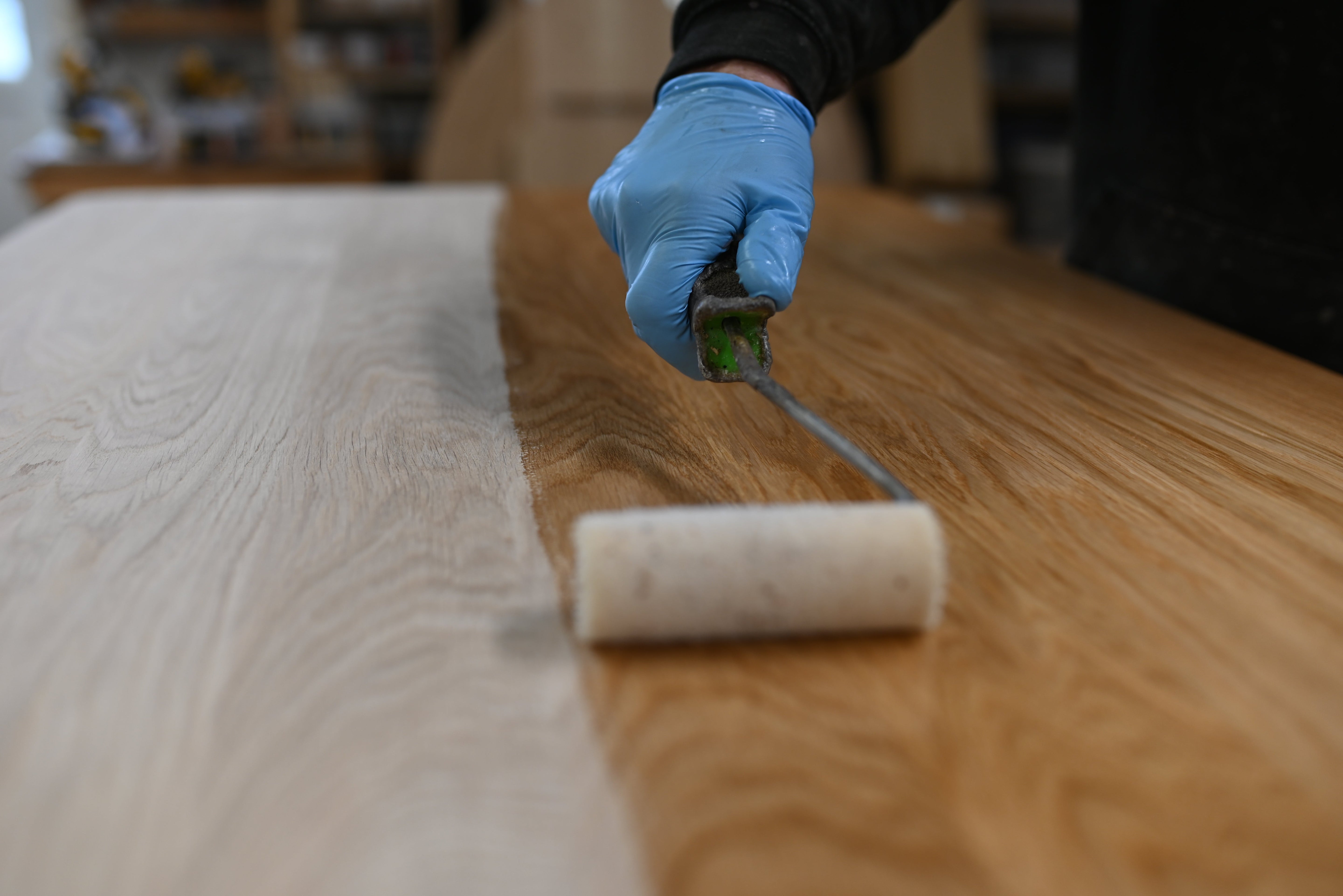
- Using a soft brush, small roller or piece of cloth, apply one coat of oil evenly over the exposed wooden surfaces of your bench.
- Wipe away any excess drips
- Wait for the oil to dry (this can take minutes or hours, depending on the product)
- Repeat steps 2-4
- Repeat steps 2-4 (optional)
- Gently sand the exposed wood using a fine-grained sandpaper
- Brush off the dust
- Repeat steps 2-4
We recommend applying oil at least once a year to maintain protection and enhance the natural character of the wood. Some oils (e.g. tung oil) are long-lasting, so annual application should be enough. Benches with minimal exposure to the elements are also unlikely to need more than this.
However, if your bench is outdoors and you are using a less durable product (e.g. teak oil), we recommend treating it twice a year (e.g., once in the spring, once in the autumn).
Have you seen our range of wooden benches?
Now you know how to treat wooden benches, you may also want to explore our handcrafted range designed for everyday use. Each unique piece has been lovingly crafted from sustainably sourced oak or other eco-friendly woods and is custom build for our clients.
Looking for a dining table to complement your space? Explore our extendable dining tables for flexible everyday use, or browse our round dining tables for compact and social dining.
For long-term care and maintenance tips, visit our care and maintenance guide.
If you have any questions, or need support with your wooden furniture send us a message via our online contact form we will be more than happy to assit

Written by Agus Bazzini



Leave a comment
This site is protected by hCaptcha and the hCaptcha Privacy Policy and Terms of Service apply.