

Por qué el diseño minimalista Japandi y escandinavo sigue dando forma a los hogares modernos
Las tendencias de diseño de interiores van y vienen.
Pero de vez en cuando, surge un estilo que se siente menos como un movimiento pasajero y más como una respuesta a cómo la gente realmente quiere vivir.
En los últimos años, los interiores minimalistas escandinavos y Japandi han pasado de los círculos de diseño de nicho a los hogares de todo el mundo. Lo que comenzó como inspiración de la simplicidad nórdica y la filosofía japonesa se ha convertido en una de las estéticas definitorias de la vida contemporánea.
Y quizás su popularidad no es sorprendente.
Porque debajo de los colores suaves y las líneas limpias se esconde algo más profundo:
un deseo de hogares más tranquilos y con más intención.

¿Qué es el estilo Japandi?
Japandi es una mezcla de dos filosofías de diseño:
el minimalismo japonés y la funcionalidad escandinava.
Aunque provienen de lados opuestos del mundo, comparten valores sorprendentemente similares:
- Simplicidad
- Materiales naturales
- Artesanía
- Funcionalidad
- Minimalismo cálido
- Conexión con la naturaleza
- Vida intencionada
En lugar de llenar los espacios con más cosas, Japandi se enfoca en elegir menos piezas con mayor significado.
Se espera que los muebles sean útiles, hermosos y duraderos.
Nada existe simplemente para decorar.
Por qué este estilo se ha vuelto tan popular hoy en día
La vida moderna se siente cada vez más ajetreada.
Los hogares a menudo contienen más tecnología, más notificaciones, más estimulación visual y más demandas competitivas que nunca.
Para muchas personas, el hogar se ha convertido tanto en un lugar de recuperación como de actividad.
El auge del trabajo híbrido solo ha acelerado este cambio.
Las mesas de comedor ahora se convierten en espacios de trabajo.
Las salas de estar se convierten en oficinas.
Las casas de planta abierta mezclan múltiples funciones.
A medida que la vida diaria se vuelve más compleja, las personas buscan naturalmente interiores que se sientan más tranquilos y fáciles de habitar.
Los espacios minimalistas crean un respiro visual.
Y esa sensación de calma se ha vuelto cada vez más valiosa.

El auge del minimalismo suave
El minimalismo temprano a veces se sentía frío.
Paredes blancas, líneas duras y habitaciones escasas ocasionalmente creaban espacios que parecían hermosos pero difíciles de habitar.
La interpretación actual ha evolucionado.
Los hogares escandinavos y Japandi modernos adoptan cada vez más lo que muchos diseñadores llaman minimalismo suave.
Esto significa:
- Tonos cálidos de roble natural
- Tejidos texturizados
- Formas redondeadas
- Iluminación en capas
- Paletas de colores suaves
- Detalles hechos a mano
- Formas orgánicas
El resultado se siente más humano.
Más relajado.
Menos como una sala de exposición y más como un hogar.
Por qué los muebles redondeados son cada vez más comunes
Un cambio notable en los interiores contemporáneos ha sido el alejamiento de la geometría nítida.
Las formas redondeadas de los muebles siguen apareciendo en los hogares modernos:
Sofás curvos.
Gabinetes de bordes suaves.
Espejos circulares.
Mesas de centro orgánicas.
Formas en forma de guijarro.
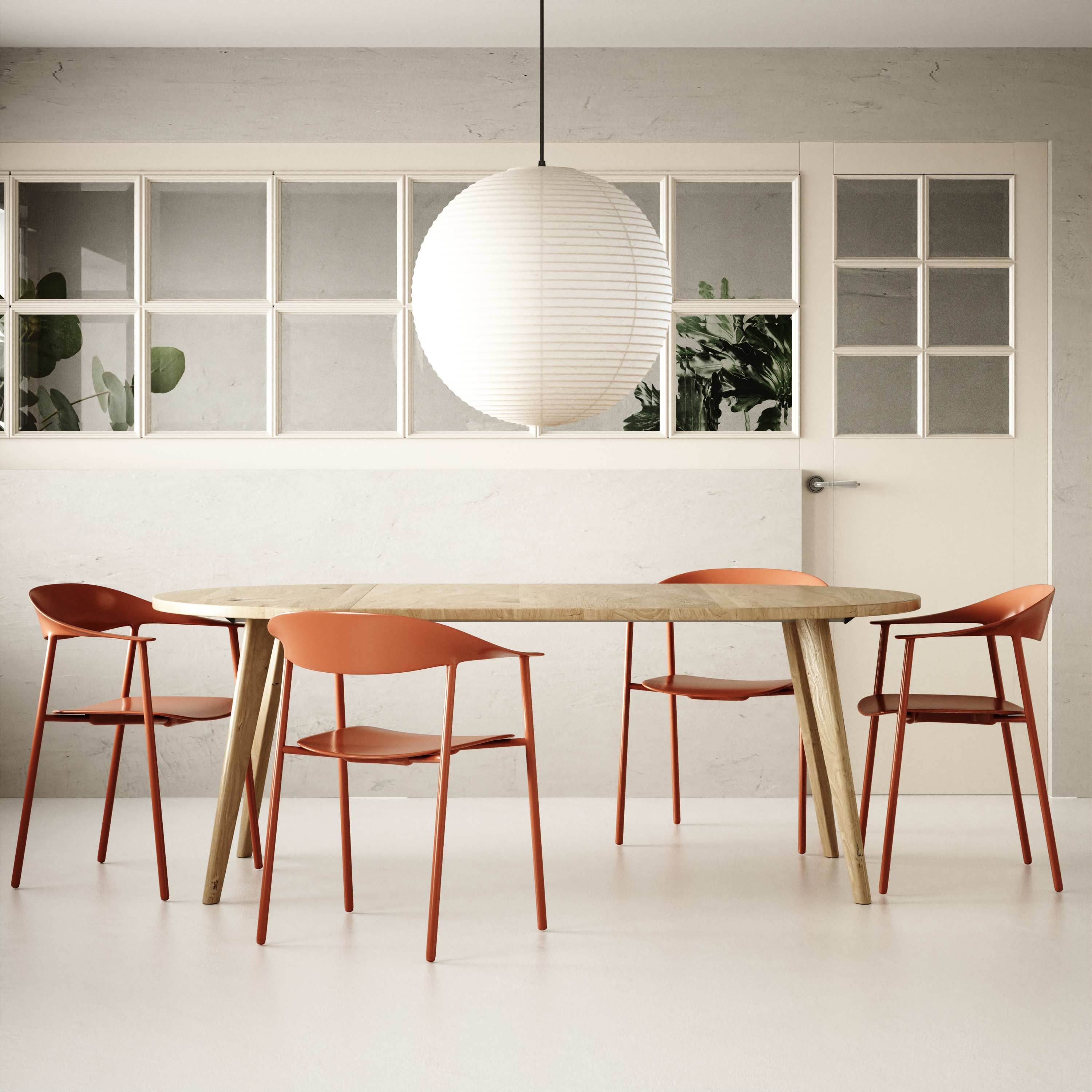
Mesas de comedor redondas.
Parte de esto puede ser comodidad visual.
Las curvas suaves naturalmente se sienten más tranquilas y fomentan el movimiento a través de un espacio.
Particularmente en interiores de planta abierta, las mesas de comedor redondas pueden hacer que los diseños se sientan más relajados y fluidos.
Este enfoque más suave se alinea naturalmente con los principios Japandi y escandinavos.
 Mesa de comedor redonda de roble macizo KALMA con borde sobre base de pedestal - juego de comedor con sillas PARIS
Los materiales naturales se han vuelto más importantes
Una característica definitoria de los interiores Japandi es el retorno a materiales que se sienten auténticos.
Roble macizo.
Piedra natural.
Lino.
Lana.
Arcilla.
Cerámica texturizada.
La veta de la madera ya no se esconde.
Nudos, variaciones y el carácter natural se celebran cada vez más como en nuestra colección Oakwell de muebles hechos con roble "Character".
En lugar de buscar la perfección, estos materiales crean calidez e individualidad.
Los muebles se sienten conectados con la naturaleza en lugar de fabricados en función de las tendencias.
Por qué la artesanía importa de nuevo
Los muebles rápidos resolvieron la conveniencia.
Pero muchas personas ahora quieren algo diferente.
A medida que los hogares se vuelven más personales e intencionados, hay una renovada apreciación por los muebles diseñados para durar años en lugar de temporadas.
Nuestros muebles artesanales se alinean naturalmente con este movimiento.
Las piezas construidas cuidadosamente con materiales sólidos envejecen maravillosamente y desarrollan carácter con el tiempo.
Este cambio hacia menos piezas, pero mejores, se encuentra en el centro de la filosofía de diseño escandinava y japonesa.
Comprar menos.
Elegir mejor.
Conservarlo más tiempo.
Muebles que apoyan cómo vivimos hoy
Quizás el auge de Japandi se trata, en última instancia, menos de estilo y más de estilo de vida.
Los hogares de hoy necesitan sentirse flexibles.
Cómodos.
Tranquilos.
Funcionales.
Los espacios necesitan cada vez más apoyar la vida familiar, el trabajo remoto, recibir invitados, momentos de tranquilidad y las rutinas diarias sin sentirse desordenados o abrumadores.
Los interiores minimalistas no se tratan realmente de tener menos.
Se trata de crear más espacio para vivir.
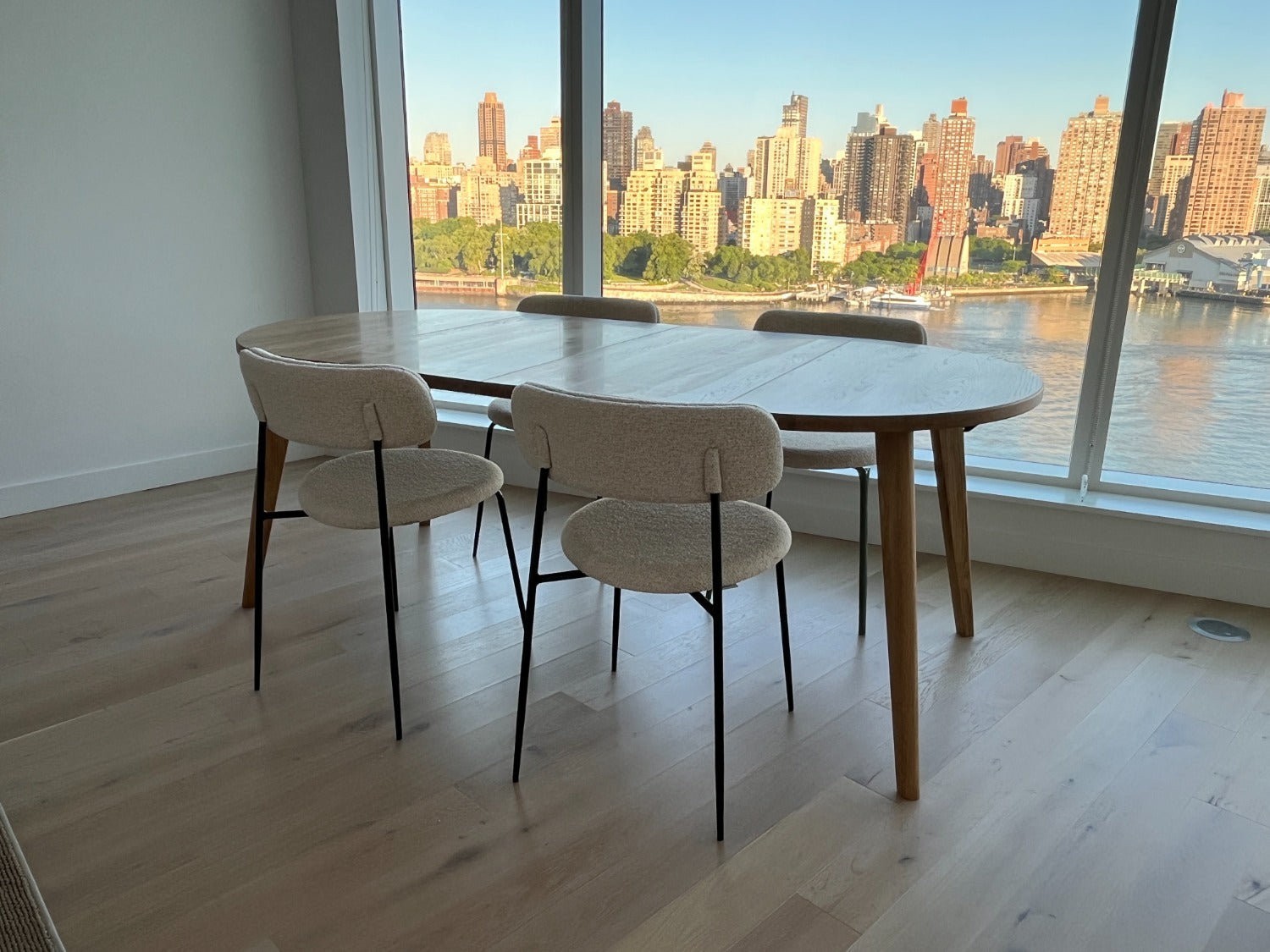
En 7MAGOK, muchas de nuestras mesas de roble macizo adoptan estos mismos principios: materiales naturales, formas suaves, artesanía cuidadosa y diseño atemporal destinado a evolucionar con la vida cotidiana.
Porque los buenos muebles no deben simplemente llenar una habitación.
Deben dar forma a cómo se siente una habitación.

Dejar un comentario
Este sitio está protegido por hCaptcha y se aplican la Política de privacidad de hCaptcha y los Términos del servicio.