

Why Minimalist Japandi & Scandinavian Design Continues to Shape Modern Homes
Interior design trends come and go.
But every so often, a style emerges that feels less like a passing movement and more like a response to how people genuinely want to live.
Over recent years, minimalist Scandinavian and Japandi interiors have moved from niche design circles into homes around the world. What began as inspiration from Nordic simplicity and Japanese philosophy has evolved into one of the defining aesthetics of contemporary living.
And perhaps its popularity is not surprising.
Because beneath the soft colours and clean lines lies something deeper:
a desire for calmer, more intentional homes.

What Is Japandi Style?
Japandi is a blend of two design philosophies:
Japanese minimalism and Scandinavian functionality.
Although they originate from opposite sides of the world, they share surprisingly similar values:
- Simplicity
- Natural materials
- Craftsmanship
- Functionality
- Warm minimalism
- Connection to nature
- Intentional living
Rather than filling spaces with more, Japandi focuses on choosing fewer pieces with greater meaning.
Furniture is expected to feel useful, beautiful and lasting.
Nothing exists simply for decoration.
Why This Style Has Become So Popular Today
Modern life feels increasingly busy.
Homes often contain more technology, more notifications, more visual stimulation and more competing demands than ever before.
For many people, home has become a place of recovery as much as activity.
The rise of hybrid work has only accelerated this shift.
Dining tables now become workspaces.
Living rooms become offices.
Open-plan homes blend multiple functions together.
As daily life becomes more complex, people naturally seek interiors that feel quieter and easier to live in.
Minimalist spaces create visual breathing room.
And that sense of calm has become increasingly valuable.

The Rise of Soft Minimalism
Early minimalism sometimes felt cold.
White walls, hard lines and sparse rooms occasionally created spaces that looked beautiful but felt difficult to live in.
Today's interpretation has evolved.
Modern Scandinavian and Japandi homes increasingly embrace what many designers call soft minimalism.
This means:
- Warm natural oak tones
- Textured fabrics
- Rounded forms
- Layered lighting
- Gentle colour palettes
- Handmade details
- Organic shapes
The result feels more human.
More relaxed.
Less like a showroom and more like a home.
Why Rounded Furniture Is Becoming More Common
One noticeable shift within contemporary interiors has been the move away from sharp geometry.
Rounded furniture shapes continue appearing across modern homes:
Curved sofas.
Soft-edge cabinetry.
Circular mirrors.
Organic coffee tables.
Pebble-shaped forms.
Round dining tables.
Part of this may be visual comfort.
Soft curves naturally feel calmer and encourage movement through a space.
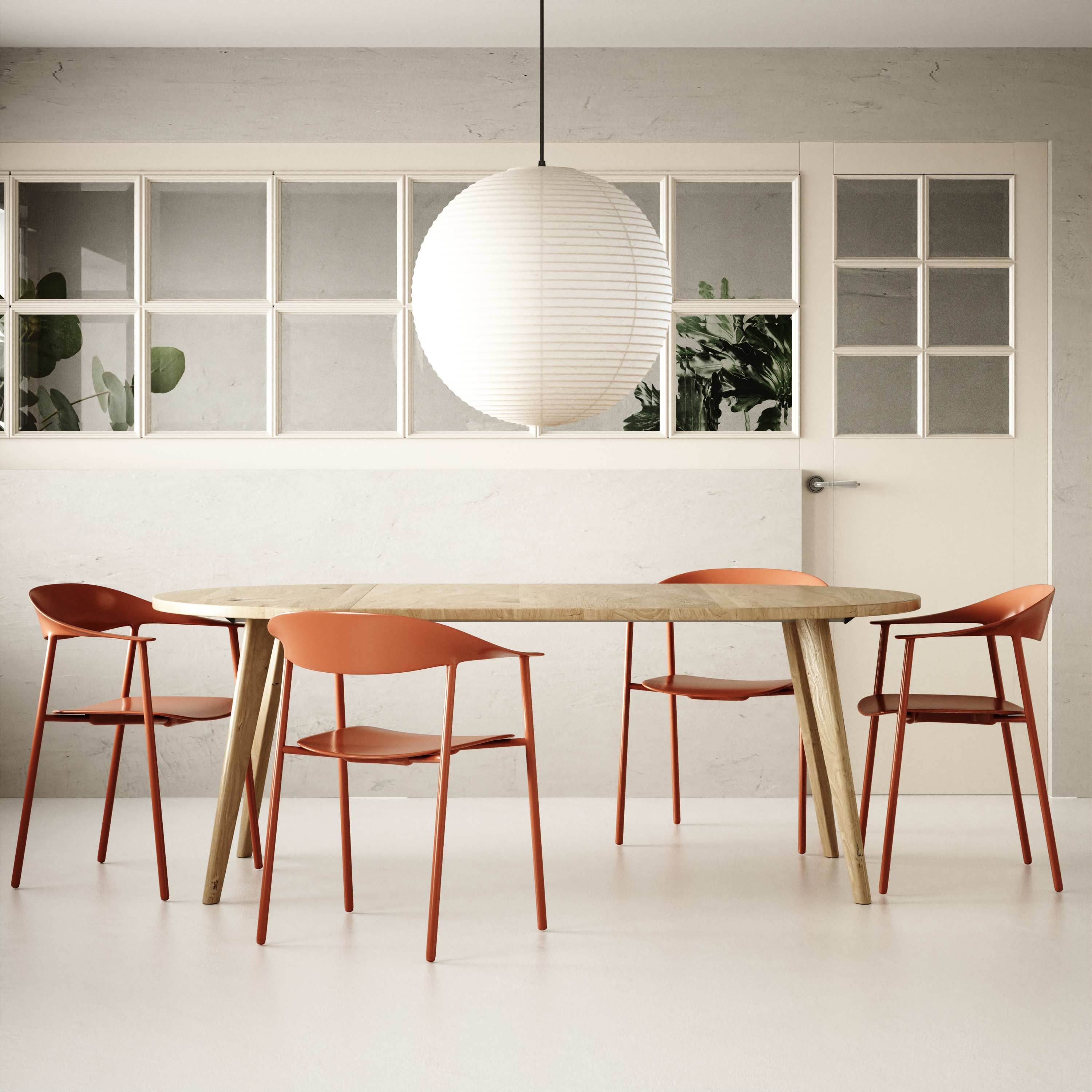
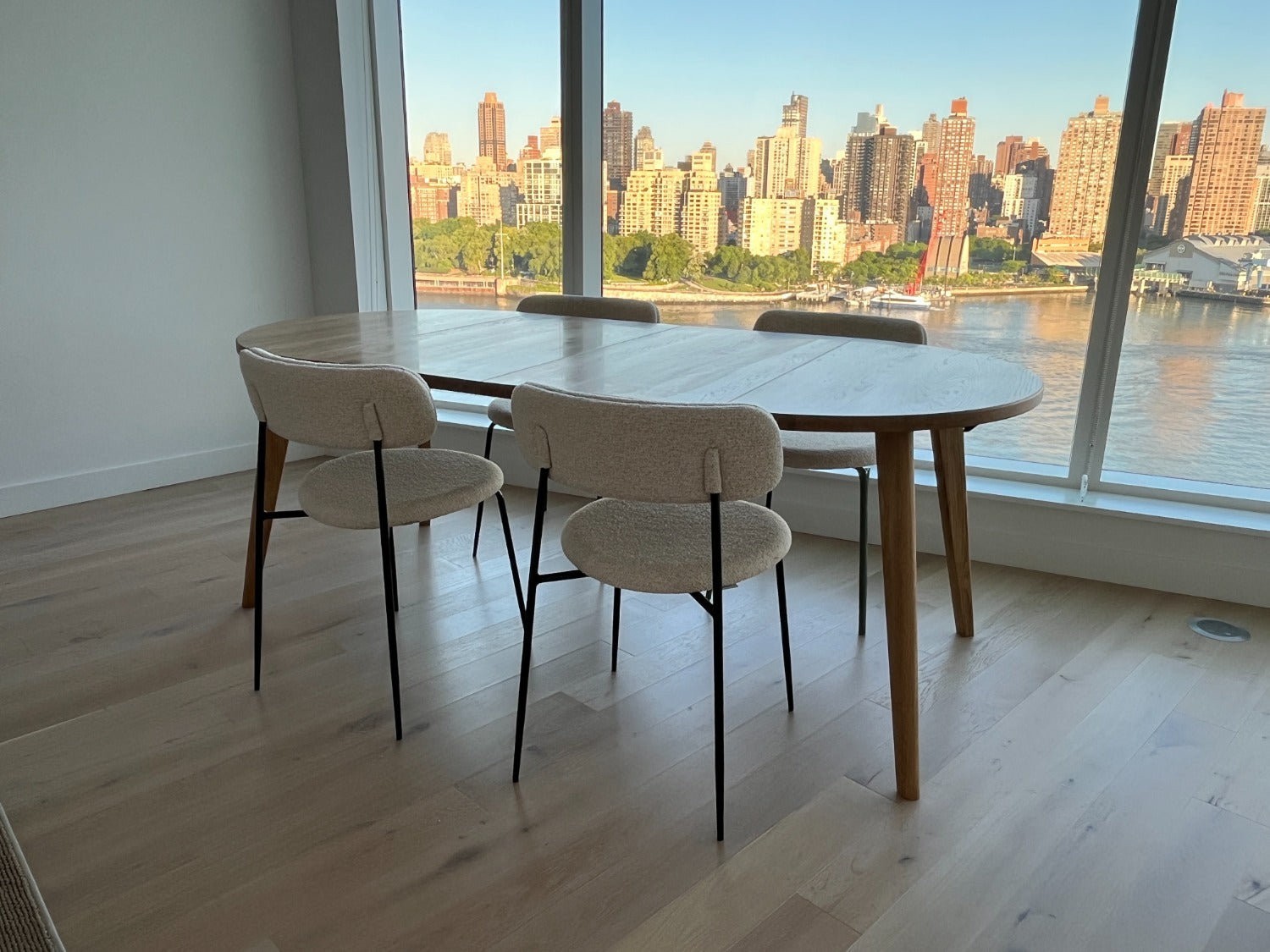
Particularly in open-plan interiors, rounded dining tables can make layouts feel more relaxed and fluid.
This softer approach aligns naturally with Japandi and Scandinavian principles.
 Round solid oak KALMA edged dining table on pedestal base - dining set with PARIS chairs
Natural Materials Have Become More Important
One defining characteristic of Japandi interiors is a return to materials that feel authentic.
Solid oak.
Natural stone.
Linen.
Wool.
Clay.
Textured ceramics.
Wood grain is no longer hidden.
Knots, variation and natural character increasingly become celebrated as it is in our Oakwell collection of furniture made from "Character" oak.
Rather than aiming for perfection, these materials create warmth and individuality.
Furniture feels connected to nature rather than manufactured around trends.
Why Craftsmanship Matters Again
Fast furniture solved convenience.
But many people now want something different.
As homes become more personal and intentional, there is renewed appreciation for furniture designed to last years rather than seasons.
Our Handcrafted furniture naturally aligns with this movement.
Pieces built carefully from solid materials age beautifully and develop character over time.
This shift toward fewer, better pieces sits at the centre of both Scandinavian and Japanese design philosophy.
Buy less.
Choose better.
Keep it longer.
Furniture That Supports How We Live Today
Perhaps the rise of Japandi is ultimately less about style and more about lifestyle.
Homes today need to feel flexible.
Comfortable.
Calm.
Functional.
Spaces increasingly need to support family life, remote work, hosting, quiet moments and everyday routines without feeling cluttered or overwhelming.
Minimalist interiors are not really about having less.
They are about creating more space for living.
At 7MAGOK, many of our solid oak tables embrace these same principles: natural materials, soft forms, thoughtful craftsmanship and timeless design intended to evolve with everyday life.
Because good furniture should not simply fill a room.
It should shape how a room feels.

Leave a comment
This site is protected by hCaptcha and the hCaptcha Privacy Policy and Terms of Service apply.